

Blog
Industrial Automation
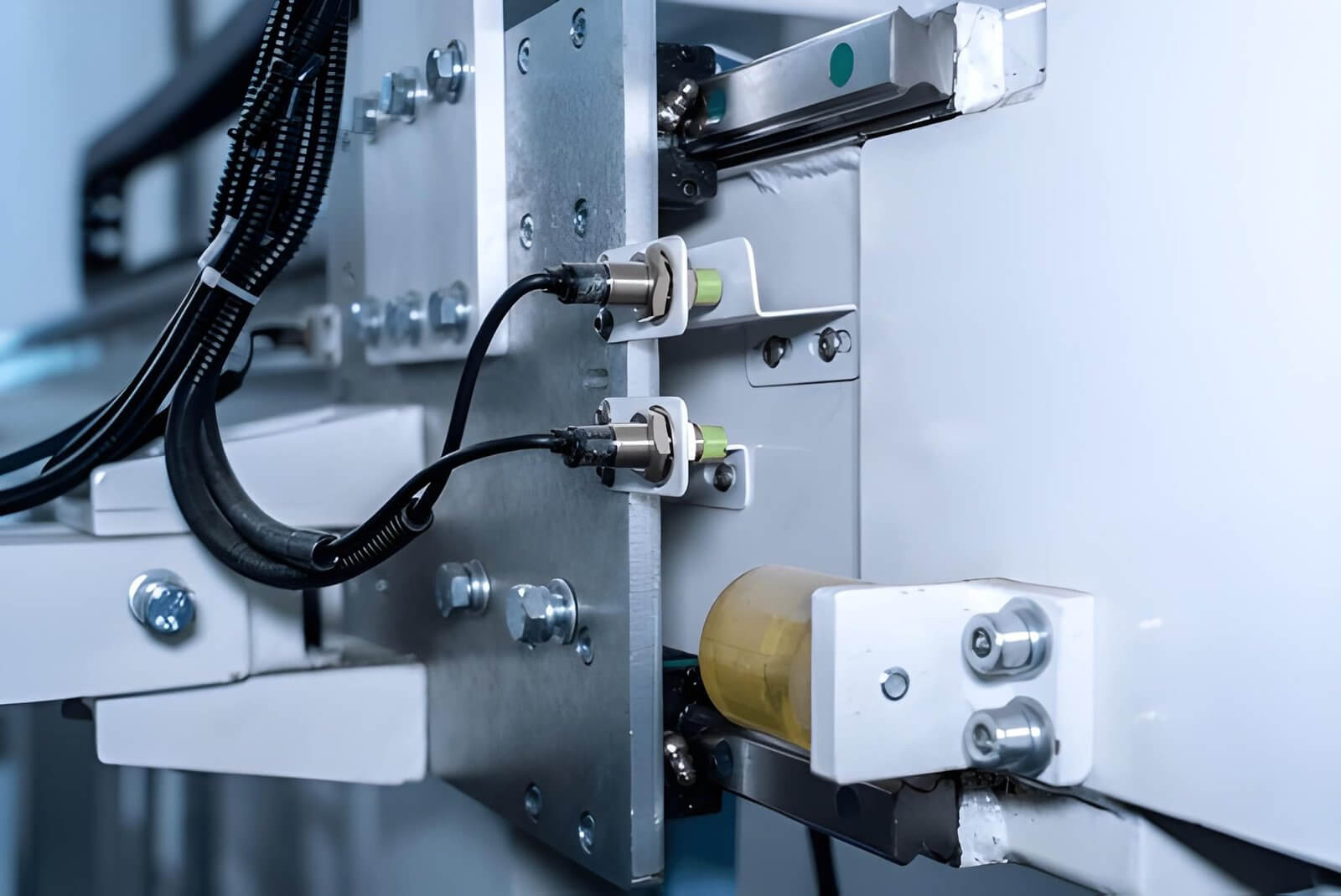
The most revolutionary impact of sensors — and their greatest contribution to humanity — is felt on industrial production lines, in life-safety architectures, and in the autonomous world of tomorrow.
The Role of Sensors in Industrial Automation
With the Industry 4.0 transformation, factories are evolving into lights-out production facilities capable of self-optimisation without human intervention. In this ecosystem, sensors are the guarantee of continuous, error-free production. Position control sensors — magnetic and optical encoders and linear scales — enable robotic arms, CNC machines and assembly lines to operate with millimetre precision, taking micron-level measurements that reduce defective output to zero. Vibration and temperature sensors mounted on press, motor or conveyor lines detect even the smallest anomalies in a machine’s operating rhythm before a fault occurs, alerting engineers in time to prevent unplanned downtime and losses running into millions.
Critical Importance for Human and Asset Safety
Sensors do not merely improve efficiency — they are the most critical defence mechanism directly protecting human lives and infrastructure. In Türkiye, a country highly prone to earthquakes, smart seismic sensors that detect seismic waves within milliseconds are of vital importance. The moment a tremor is sensed, they shut off natural gas valves, disable generators, and bring lifts to the nearest floor with doors open — preventing secondary disasters such as gas explosions, fires and trapped passengers. Equally, gas and fire sensors in industrial facilities and homes that instantly detect carbon monoxide, gas leaks or smoke activate automatic ventilation and suppression systems, averting major catastrophes.
The Sensing Power Shaping the Technologies of Tomorrow
Artificial intelligence, the Internet of Things (IoT) and autonomous systems — all of which are shaping the world of the future — require raw data, and sensors are the sole source of that data. Self-driving vehicles can safely navigate traffic thanks to LiDAR, radar and ultrasonic sensors that map their surroundings within milliseconds. In smart cities, everything from ultrasonic sensors measuring the fill level of waste bins to optical sensors adjusting traffic signals based on congestion contributes to resource efficiency and sustainability. In healthcare, optical sensors in smartwatches continuously monitor heart rate, blood oxygen levels and even ECG readings throughout the day, automatically alerting medical teams in emergencies such as cardiac events.
 Pressure Measurement
 Linear Measurement
 Rotary (Angular) Measurement
 Level Measurement
 Temperature Measurement
 Tilt / Angle Measurement
 Vibration Sensors
 Speed and Motion Measurement
 Industrial Joysticks
 Seismic / Earthquake Sensors
 Mechanical Plungers and Pressure Switches
 Elevator Photocells
 Laser Distance Sensors
 Flow Meters
 Digital Readouts, Displays and Counters
 Counting Sensors
 Tap Sensors
 Fabric Sensors
 Encoder Signal Conditioner and Optical Isolators
 Couplings
 Cables and Connectors
 New Products